Qaf
Agentic commerce on XRPL. An AI agent buys on your behalf; a universal wallet holds every credential (tickets, insurance, RWA, eSIMs); ZK identity proves facts without revealing them. 4s finality.
Demo Video
Project Information
At a Glance
Agentic commerce on XRPL. An AI agent buys on your behalf; a universal wallet holds every credential (tickets, insurance, RWA, eSIMs); ZK identity proves facts without revealing them. 4s finality.
Description
Stripe and OpenAI are building agentic commerce on Visa/Mastercard rails: slow, expensive, geographically broken, locked to pre-approved merchants. QAF replaces those rails with XRPL — the only Layer 1 with native DEX, NFTs, IOUs, stablecoin settlement (RLUSD) and 4-second finality.
Three problems, one architecture:
-
Verification is the worst UX in finance. Every service wants your passport, address, DOB, selfie, phone, email — each a breach waiting to happen. QAF verifies you once with a KYC partner, issues a verifiable credential locked to your wallet, and at every merchant boundary proves only the needed fact ("EU resident, over 18") in ~200 bytes using Boundless + RISC Zero ZK proofs verified on-chain by a Smart Escrow on XRPL's Groth5 devnet. The merchant learns the answer, nothing else — and the ledger, not QAF, enforces fund release.
-
Wallets are walled gardens. Apple Wallet stores pictures of credentials issued by partners Apple pre-approves. In QAF, every credential is a first-class XRPL token: XLS-20 NFTs for unique items (a specific insurance policy, concert ticket, hotel booking), Issued Tokens or Multi-Purpose Tokens for fungible balances (mobile data, transit credits, RWA deposits). Anything can be tapped to use, transferred to a friend, or resold in 4 seconds on the native XRPL DEX.
-
Agent commerce needs both. When an AI agent buys across 50 merchants, you'd be handing your passport to 50 databases — and the things it buys need to land somewhere the agent can read, use, transfer, and resell. QAF gives the agent ZK proofs for identity and a tokenized wallet for storage, so the full loop (intent → quote → purchase → credential → presentation → resale) happens on public rails without exposing the user.
User experience. Tap to create a wallet with FaceID — no seed phrase, no email. Chat with a Gemini 3 agent (Google ADK): "Buy travel insurance for Paris this weekend, under 20 EUR." The agent queries merchants via X402 HTTP 402 micropayments through the T54 Labs Facilitator, returns three quotes, asks for confirmation with a 10-second cancel. Approve with FaceID; a Boundless ZK proof exposes only the required facts; payment settles in RLUSD from a fresh stealth address; QuickNode Streams pushes the NFT-mint event to the wallet the instant it lands. The card slides in. Tap to use at a turnstile over NFC/QR, transfer to a friend, or sell back on the native DEX at 80% — refunded in ~4 seconds.
Privacy by construction. Every transaction uses a fresh derived address (no clustering). Credential payloads are AES-GCM encrypted on-device; only a 32-byte hash hits the chain. ZK proofs at merchant boundaries reveal exactly one fact per interaction — never the name, DOB, or wallet address. QAF holds no keys, no PII, no activity logs. Structurally incapable of leaking, losing, or being subpoenaed for data it never had.
Tiered security. Four tiers scale friction to action sensitivity. Tier 0 (view): open the app. Tier 1 (routine): FaceID. Tier 2 (high-value): FaceID + PIN. Tier 3 (irreversible): FaceID + PIN + 24-hour cross-device cancel window — defeating both phishing and the "unlock-or-I-hurt-you" coercion attack.
Real-world assets. Partner banks deploy an XRPL issuer address and mint tokenized deposits (e.g., "BDF-EUR") directly to a user's QAF wallet as Issued Tokens or, for regulated instruments, Multi-Purpose Tokens (XLS-33d). Held value earns yield, transfers, acts as collateral, or redeems back to traditional rails. The same primitive banks the unbanked: QAF works without an email, bank account, government ID, or credit history — just a phone and a face.
Partner stack is structural, not decorative. XRPL (host ledger, 4s finality, native DEX/NFTs/IOUs/MPTs). Boundless + RISC Zero (ZK prover network; Smart Escrow on Groth5 verifies via EscrowFinish). QuickNode (RPC + Streams + Webhooks + Backfill — the real-time nervous system that makes the wallet feel instant and enables stealth-address architecture). T54 Labs X402 (HTTP 402 micropayments for agent-to-merchant quote queries). Ripple RLUSD (settlement stablecoin). Google ADK + Gemini 3.1 Pro + Gemini 3 Flash + Imagen 4 Ultra (agent reasoning, routing, generative credential art). Remove any one and a workflow breaks.
QAF is not a feature. It is the identity, wallet, and payment layer for the next decade of commerce — built on the one public ledger that already has every primitive it needs, and on the exact partner stack Make Waves asks builders to prove.
Technical Details
4 layers (Identity / Agent / Assets / Liquidity) over XRPL.
Services (independent Docker builds): qaf-web (Bun/Next.js PWA), qaf-bc (Rust/XRPL), qaf-ai (Python/uv, Google ADK). qaf-app ( React Native ).
Partners:
XRPL: XLS-20 NFTs, IOUs, MPT (XLS-33d), native DEX, Memos, BIP32 stealth addresses, RLUSD, 4s finality. Boundless / RISC Zero: zkVM attests KYC facts; Smart Escrow on Groth5 verifies via EscrowFinish. QuickNode: RPC + Streams on every derived sub-address; custom JS filters; Webhooks to Qaf Back; Backfill for recovery. T54 X402: xrpl-facilitator-*.t54.ai for agent quote queries at sub-cent RLUSD. Google: Gemini 3.1 Pro + 3 Flash + Imagen 4 Ultra.
Onboarding: WebAuthn/passkey → seed derived from passkey → iCloud/Google sync recovery. AES-GCM on-device; only hashes on chain.
Team
3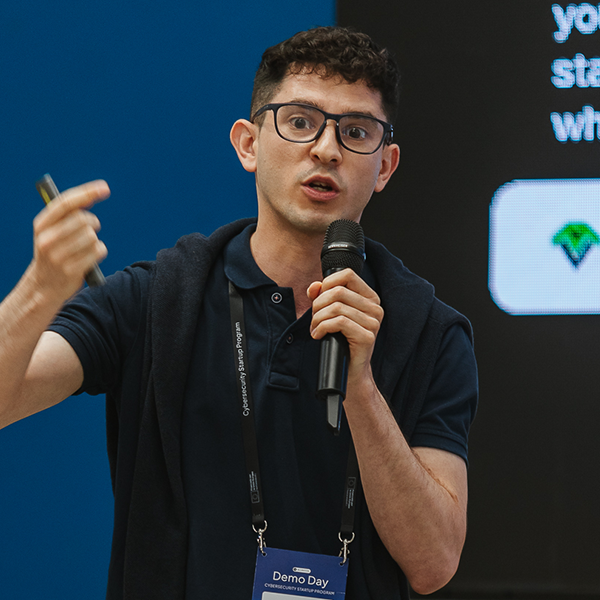
Jose OSPINA
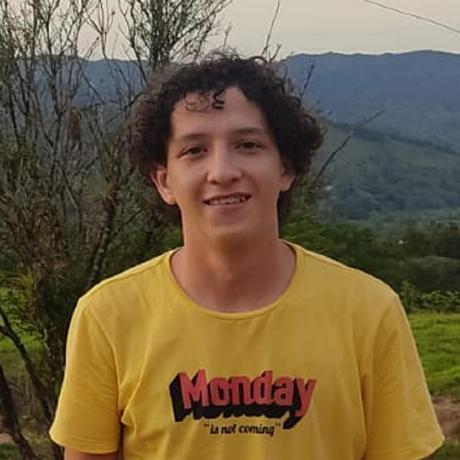
Cristian OSPINA
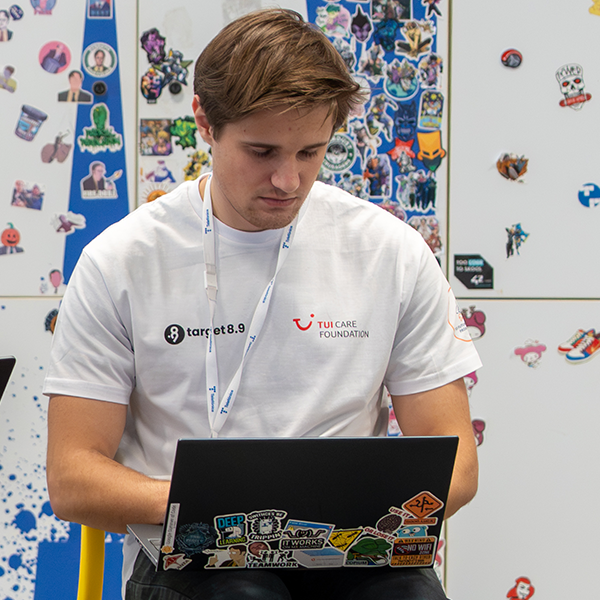
Aitor Nevzorov
Hackathon
HACK THE BLOCK 2026 Paris Blockchain Week XRPL Hackathon
Duration
Apr 11, 6:30 AM - Apr 12, 6:00 PM UTC